Three recent scholarship recipients are working to advance stomach cancer research and care globally.
 Gabrielle Bouska
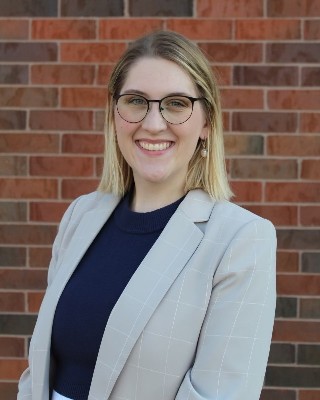
More than ten years ago, No Stomach For Cancer established a scholarship in the name of Mhari Saito to support research and unite the caring power of people worldwide affected by stomach cancer. Mhari embodied the mission of No Stomach For Cancer, but sadly passed away from stomach cancer on April 15, 2013. Dr. Gabrielle Bouska was a graduate student when she was awarded the Mhari Saito scholarship and is now an internal medicine resident at Gundersen Health System in La Crosse, Wisconsin. She developed a strong interest in oncology, particularly gastrointestinal malignancies, early in her career as a patient with Hereditary Diffuse Gastric Cancer herself. During her time at Pacific Northwest University of Health Sciences (PNWU), she remained actively engaged in patient advocacy and cancer awareness efforts.
Her dedication to gastric cancer advocacy was recognized with the Mhari Saito Scholarship from No Stomach For Cancer, which enabled her to attend the ASCO GI Symposium. There, she connected with leaders in GI oncology, expanded her understanding of advances in cancer care, and solidified her commitment to a future career in hematology/oncology.
Dr. Bouska is passionate about integrating clinical excellence with advocacy to improve patient outcomes, especially for those affected by gastric and other GI cancers. She aspires to pursue a hematology/oncology fellowship and continue working at the intersection of medicine, education, and community outreach.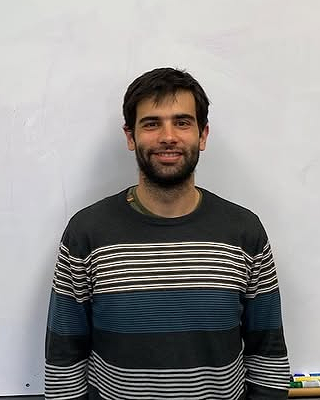 José Garcia Pelaez
José Garcia Pelaez, a PhD student from Porto, Portugal, has spent the last few years studying families with hereditary diffuse gastric cancer who are genetically undiagnosed, with support from a large European project called “Solving the Unsolved Rare diseases.” Parallel to this project, José had dedicated his time to performing a genotype-phenotype analysis on carriers of CDH1 germline variants by using the most extensive set of data yet collected, which aimed to shed light on many of the unanswered questions for hereditary diffuse gastric cancer. Due to its potential for improving clinical guidelines for genetic testing of patients at risk of developing this deadly cancer, this latter project has been recognized at several international conferences, most recently at the International Gastric Cancer Congress in Houston, where he presented it during the presidential lecture.
To culminate his PhD studies, José had the opportunity to travel to New Zealand to work under the co-supervision of Prof. Parry Guilford, a researcher at the University of Otago who discovered the CDH1 gene mutation, to conclude and validate this promising project. The Mhari Saito scholarship was awarded to José to support his expenses in Dunedin, New Zealand.
 Rita Matos
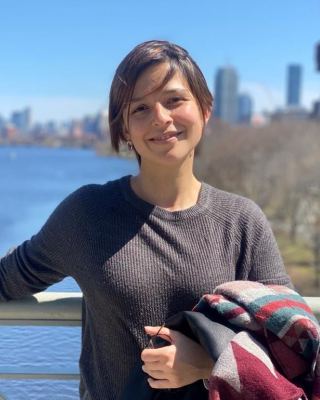
Rita Matos is a PhD student in the Doctoral Program on Cellular and Molecular Biotechnology Applied to Health Sciences (BiotechHealth) at the University of Porto, Portugal. As a Biochemist, she was always interested in molecular biology and its application to human genetics. Recently, her interest has also been piqued by molecular oncology and its application to hereditary cancer syndromes. Her passion for Human Genetics motivated her to pursue a PhD project in this area.
During her master’s thesis project, Rita began studying the CDH1 gene, a key gene associated with gastric cancer, to understand the importance of its intronic regions and their association with Hereditary Diffuse Gastric Cancer (HDGC) syndrome. This rare syndrome sparked her interest to such an extent that she felt it should be the main topic of my PhD.
In October 2019, she was awarded a PhD studentship by the Portuguese Foundation for Science and Technology (FCT), supervised by Dr. Carla Oliveira at the Expression Regulation in Cancer Group (ERiC) within the Instituto de Investigação e Inovação em Saúde (i3S). Additionally, she was co-supervised by Gustavo Mostoslavsky, who accepted her as a visiting PhD student at Boston University’s Center for Regenerative Medicine (CReM).
Within the scope of a rare genetic disease syndrome that is far from fully understood, Rita began her PhD research entitled “The primary genetic cause and beyond: the lifetime risk and phenotype modifiers in HDGC”. It was an ambitious research project that, if successful, will improve the ability to predict if and when an individual carrier of a genetic mutation in CDH1 will develop cancer, improve management and tailored treatments to these patients, and empower the decision-making of at-risk HDGC families.
“This period in the USA has had an enormous impact on my life, and I consider it a crucial step in my professional growth. I was forced out of my comfort zone and challenged myself in a new environment, improving my self-confidence and leadership potential. The financial support from No Stomach For Cancer diminished my financial worry so that I could focus on my project.”
While working with internationally renowned experts at Boston University and the University of Porto, Rita expanded her scientific horizons and acquired new research competencies. The scholarship provided crucial support for her 8-month stay in Boston, enabling her to complete her PhD work plan and take it to the next level. Moreover, Rita was able to transfer the knowledge she acquired back to her host research institute and the ERiC group at i3S. The generated knowledge will be applied to establish the very first biobank of iPSC-derived organoids for patients with this rare syndrome, thanks to the contribution of the Centro Hospitalar e Universitário São João (CHUSJ) hospital in Porto.